Where Freight Fraud Starts: 5 Lessons Every Trucking Company Should Know
Freight fraud has become one of the biggest challenges facing the transportation industry, but many companies are still treating it like a problem that belongs solely to IT, security teams, or insurance providers.
The reality is much different.
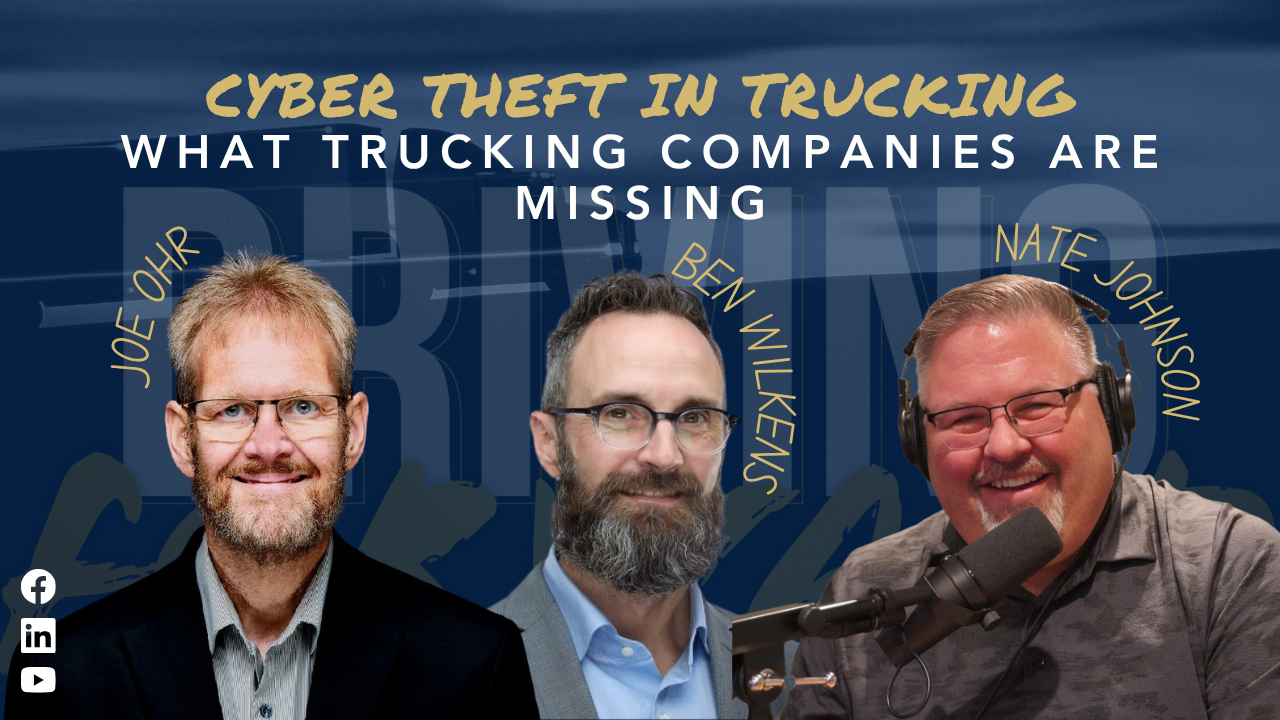
On a recent episode of the Driving Forward podcast, GLCS CEO Nate Johnson spoke with Ben Wilkens and Joe Ohr from the National Motor Freight Traffic Association (NMFTA) about how freight fraud is evolving and what trucking companies can do to better protect themselves.
Their message was clear:
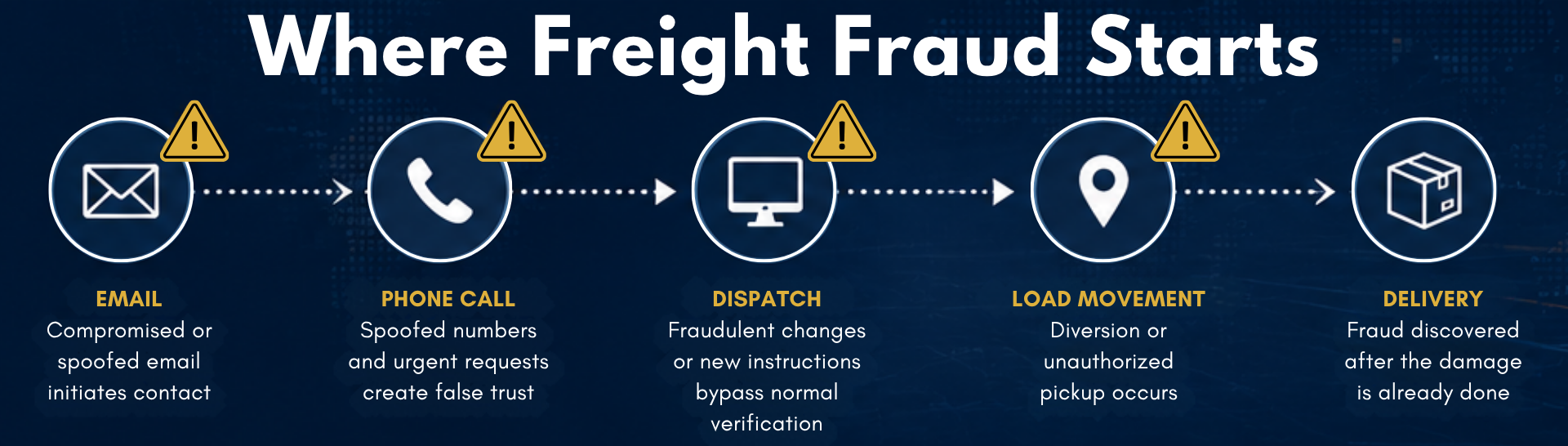
Most freight fraud events today start long before a load goes missing.
They often begin with a compromised email account, a spoofed phone number, a rushed decision, or a breakdown in a process that everyone assumed was working.
Lesson #1: Fraudsters Are Attacking People, Not Just Technology
Many of today's freight fraud schemes rely on social engineering rather than sophisticated hacking.
Criminals are exploiting trust, urgency, and routine workflows. They know transportation moves fast. They know dispatchers, brokers, and operations teams are under pressure. They know that if something looks legitimate enough, people may not stop to question it.
The takeaway?
Train employees to recognize red flags, question unusual requests, and verify information when something feels off.
Lesson #2: Drivers Are Part of Your Fraud Prevention Team
One insight that stood out from the discussion was the role drivers play in preventing fraud.
Drivers are often the first people to notice when something doesn't seem right—a destination change, unusual instructions, or a communication that doesn't match the normal process. Yet many companies leave drivers out of fraud and cybersecurity training.
Fraud prevention shouldn't stop at the office door.
Lesson #3: Processes Matter More Than Technology
Technology is important, but strong processes are often the difference between catching fraud and becoming a victim.

The guests emphasized the importance of:
Verifying unexpected delivery changes
Reconfirming high-value loads
Using multi-factor authentication (MFA)
Regularly reviewing access to systems and load boards
Creating checkpoints throughout operational workflows
The goal isn't to eliminate trust. It's to create verification steps that make fraud harder to execute.
Lesson #4: "Trust But Verify" Needs to Become the New Standard
For years, trucking has been built on relationships and trust.
Unfortunately, fraudsters understand that too.
Today's bad actors can impersonate legitimate companies, compromise email accounts, spoof phone numbers, and use stolen credentials to appear credible. In many cases, they are counting on someone assuming a request is legitimate because it looks familiar.
Verification is no longer optional.
It is becoming a standard part of doing business.
Lesson #5: Prevention Is Easier Than Recovery
Perhaps the biggest takeaway from the conversation was that companies should focus less on how to recover from freight fraud and more on how to prevent it.
By the time a stolen load is discovered, the damage is often already done.
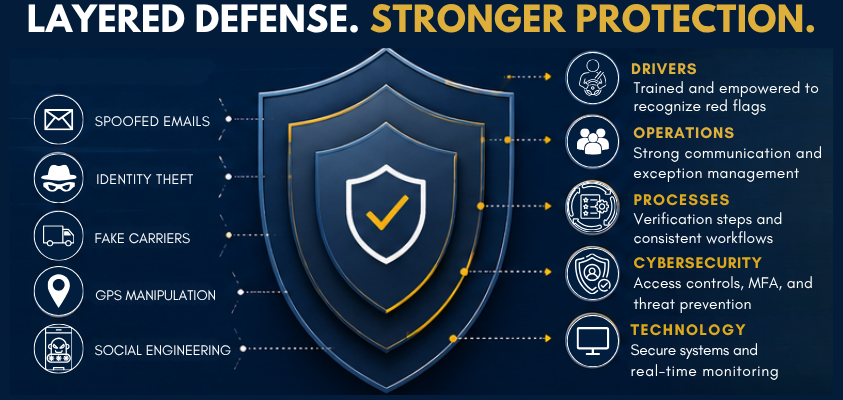
The most effective defenses are proactive:
Employee awareness training
Consistent operational processes
Strong cyber hygiene
Ongoing carrier and partner verification
Open communication across the organization
As the guests noted, fraud prevention is no longer just an IT responsibility. It touches operations, dispatch, accounting, safety, compliance, leadership, and drivers alike.
Resources to Help Protect Your Business
The good news is that trucking companies don't have to tackle freight fraud alone.
During the podcast, the NMFTA highlighted the importance of industry collaboration and shared resources through the Freight Fraud Prevention Hub (FFPH). FFPH promotes best practices in carrier identity verification, risk awareness, and fraud avoidance. The website provides educational materials, fraud prevention guidance, cybersecurity resources, and best practices designed to help carriers, brokers, and shippers strengthen their defenses before an incident occurs.
Companies can learn from real-world experiences, access practical fraud prevention tools, and stay informed about emerging threats impacting the transportation industry.
For organizations looking for additional support, GLCS works with trucking and logistics companies to identify operational and technology gaps that can create risk. Our team combines transportation experience with technology expertise to help companies strengthen cybersecurity awareness, improve business processes, evaluate technology systems, and implement practical safeguards that reduce exposure to freight fraud and other operational threats.
Whether you're reviewing carrier onboarding procedures, improving user access controls, strengthening employee training, evaluating technology vendors, or assessing the security of your technology ecosystem, taking proactive steps today can help prevent costly incidents tomorrow.
The Bottom Line
Freight fraud continues to evolve because criminals continue to evolve.
The companies that will be most successful in combating it won't necessarily have the biggest technology budgets. They'll be the organizations that create a culture of awareness, verification, and accountability throughout their operation.
Because today, the best defense against freight fraud isn't a single tool.
It's informed people following strong processes every day.
Listen to the full Driving Forward podcast episode featuring NMFTA’s Ben Wilkens and Joe Ohr for deeper insights into cyber-enabled freight fraud and what fleets can do to defend themselves.